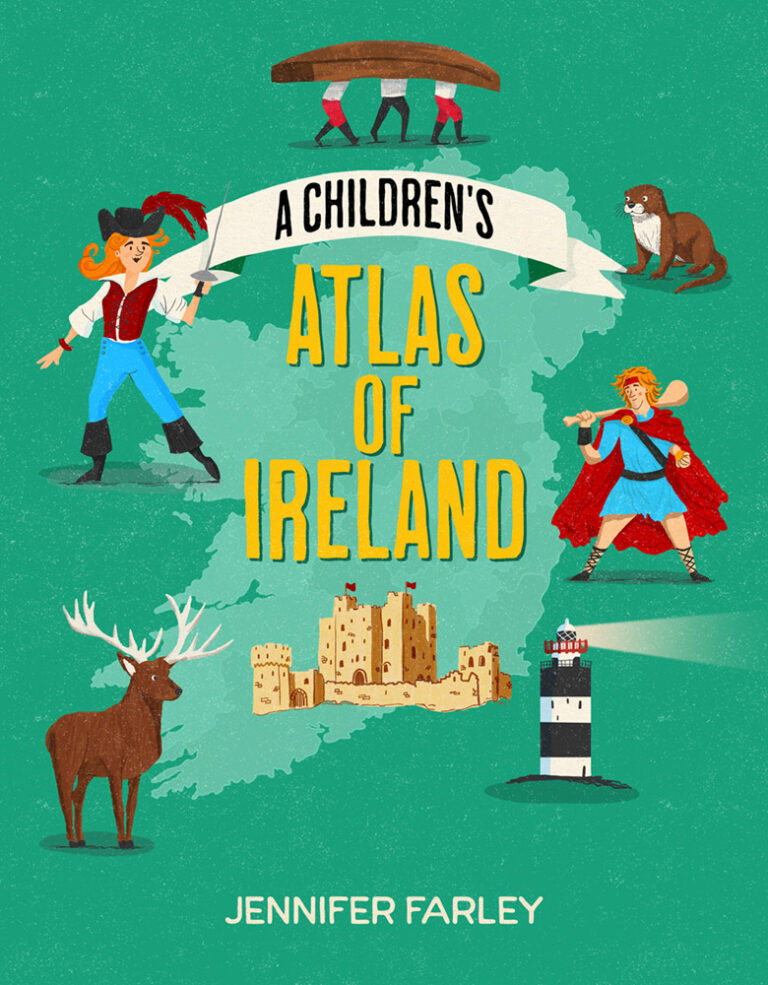
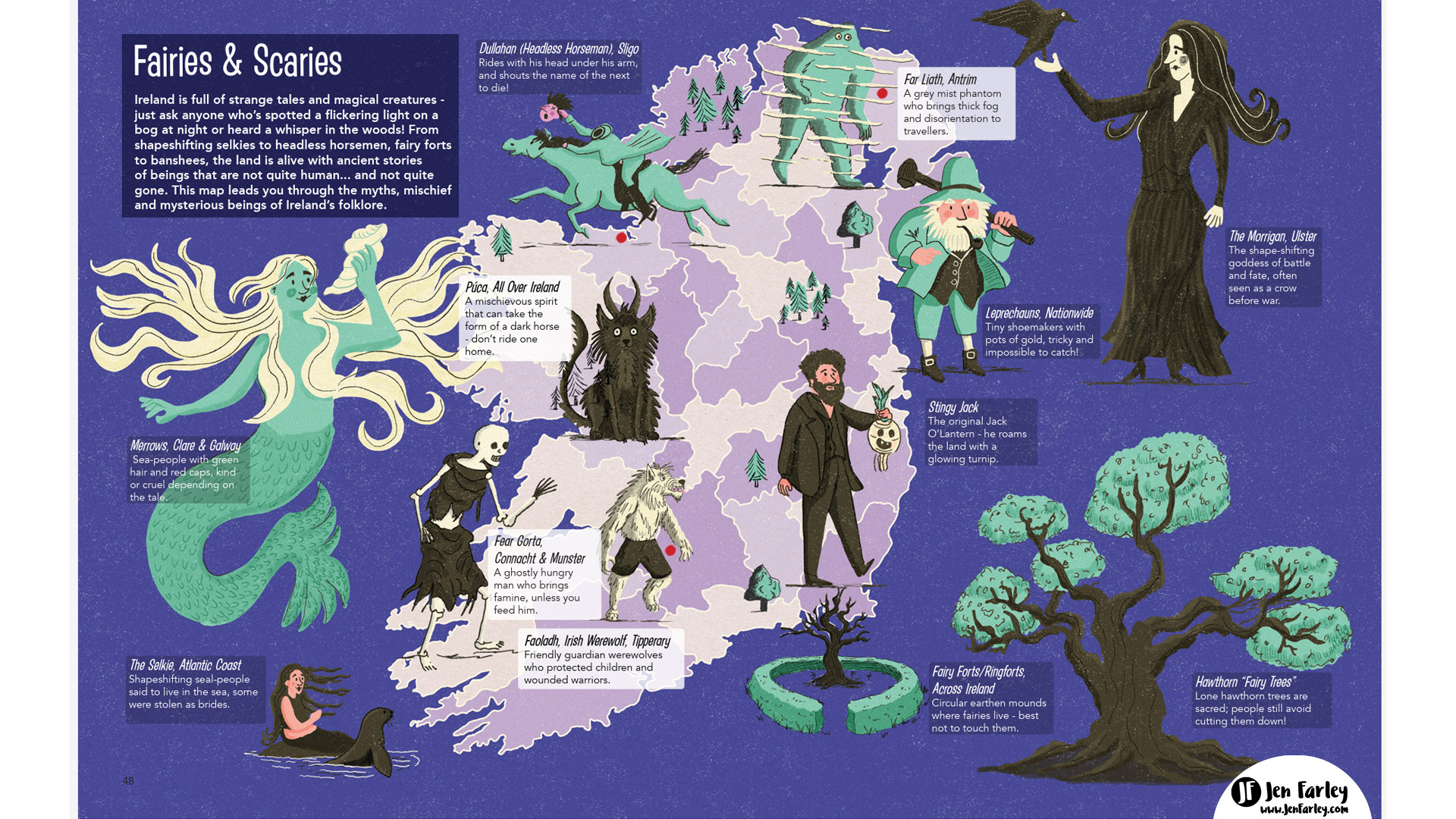
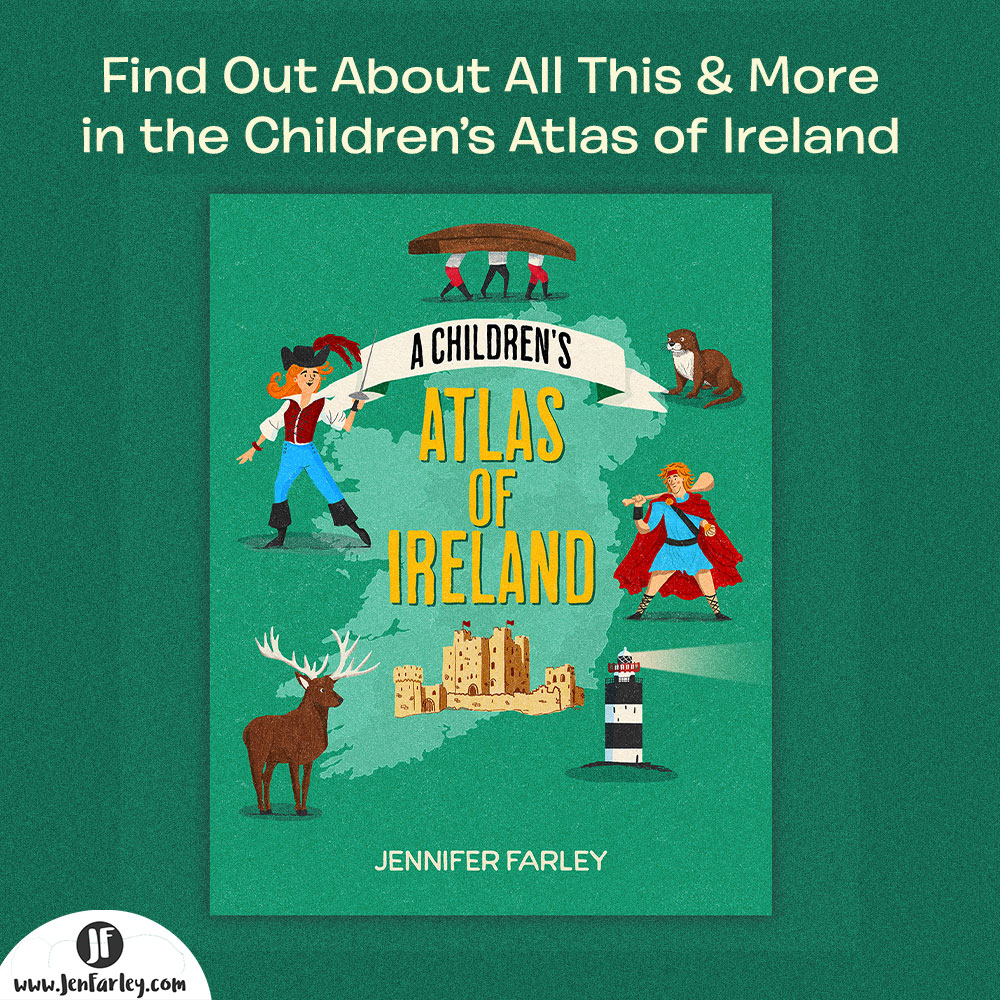
This is a partial excerpt from my book A Children’s Atlas of Ireland, called “Fairies & Scaries”.
Ireland is full of strange tales and magical creatures – just ask anyone who’s spotted a flickering light on a bog at night or heard a whisper in the woods! From shapeshifting selkies, to headless horsemen, fairy forts to banshees, the land is alive with ancient stories of beings that are not quite human … and not quite gone. The map leads you through the myths, mischief and mysterious beings of Ireland’s folklore.
Halloween as we know it began in Ireland. Over 2,000 years ago, the ancient Celts marked Samhain (pronounced “sow-in”), the end of the harvest and the start of the dark half of the year. People believed in a thin veil between our world and the Otherworld, so spirits and strange creatures could wander freely. Bonfires blazed, and people wore disguises to blend in with the ghosts and ghouls.
But Ireland’s strange spooky characters don’t wait for October. They lurk in the misty hills, the lonely coastlines and fairy forts all year round. Let’s meet the ones who I’ve included in my book.
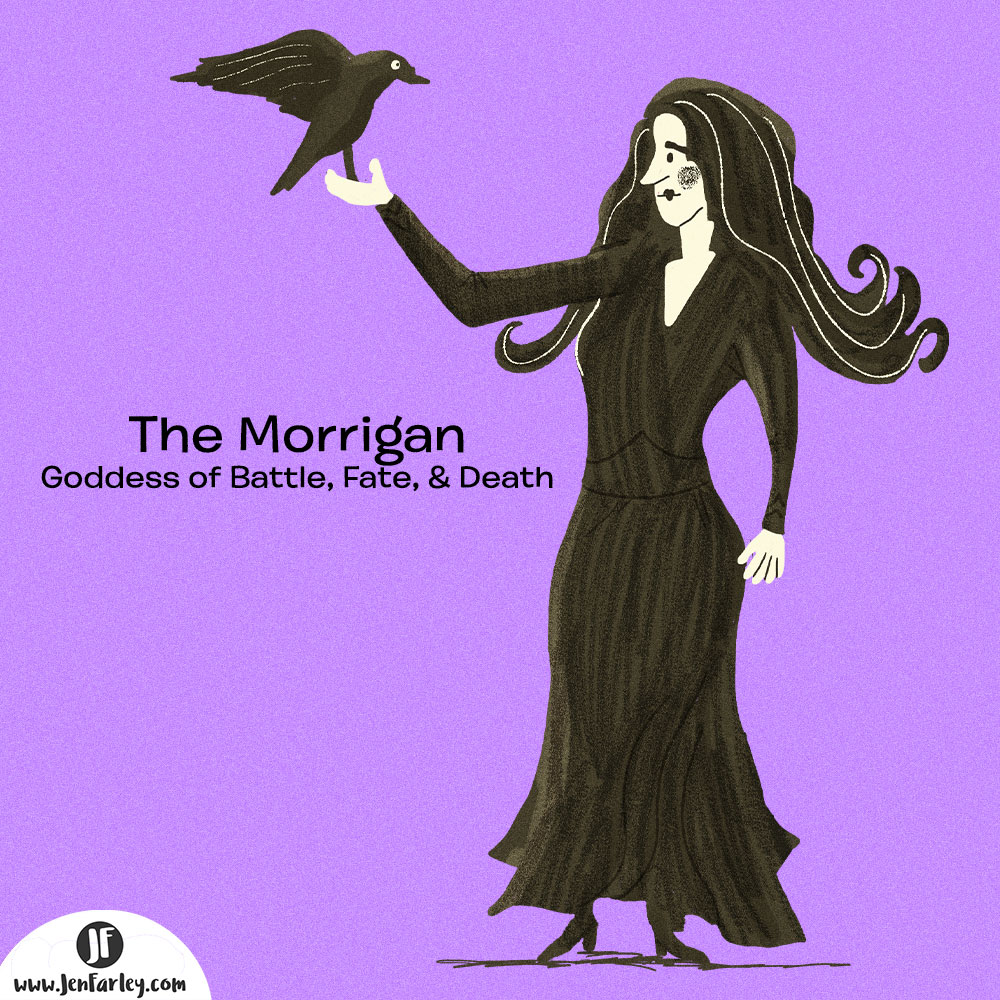
The Morrigan
The Morrigan is a fearesome, shape-shifting goddess of fate and battle. She often appears as a crow or raven, circling over battlefields, and in the Ulster stories she haunts the great hero Cú Chulainn.
Sometimes she is seen as the Washer at the Ford, a woman scrubbing bloodstained armour in a stream, a sign that a warrior will soon fall.
If a crow is watching you a little too closely, take it as a warning.
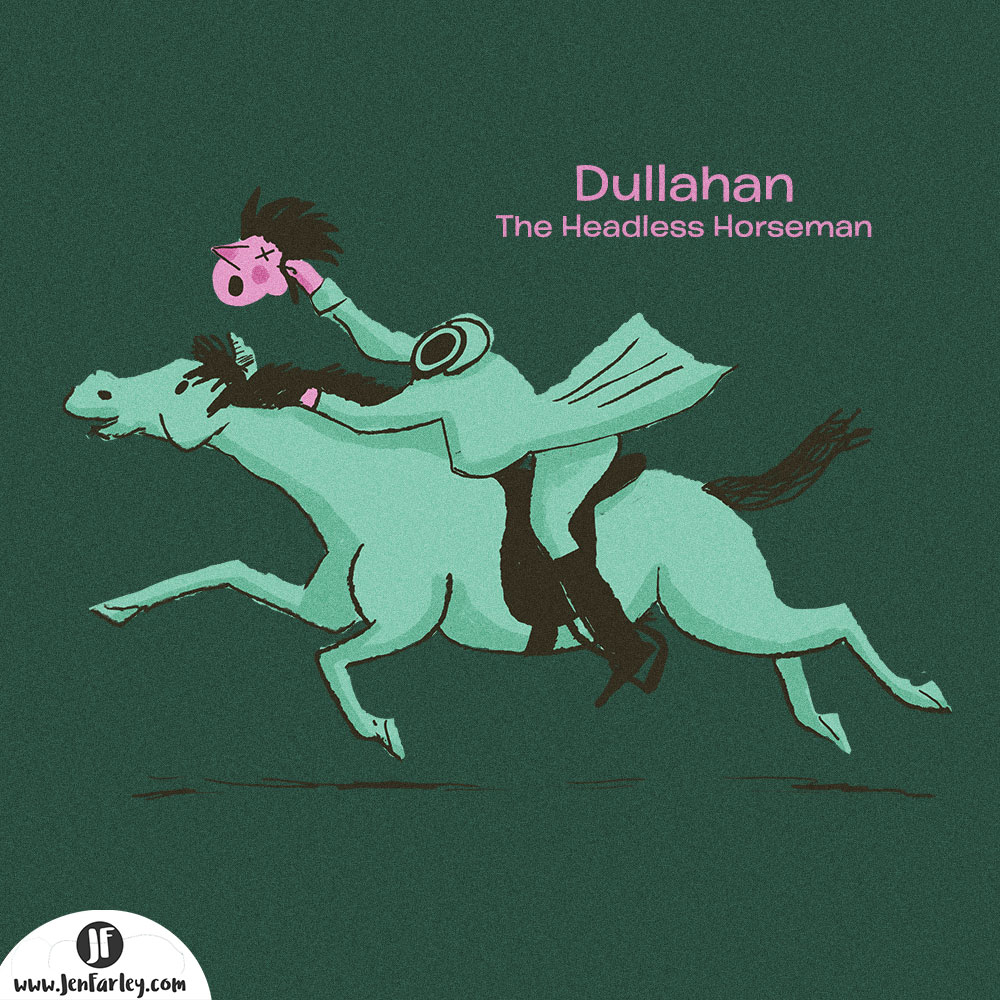
The Dullahan (Headless Horseman)
Is that a hoofbeat in the distance? Are you alone on a dark country road?
The Dullahan rides a horse whilst carrying his own head tucked under his arm, its grotesque facade glowing in the moonlight.
When he stops riding, someone nearby is about to die, and he shouts out their name. If you meet him, keep your name to yourself!
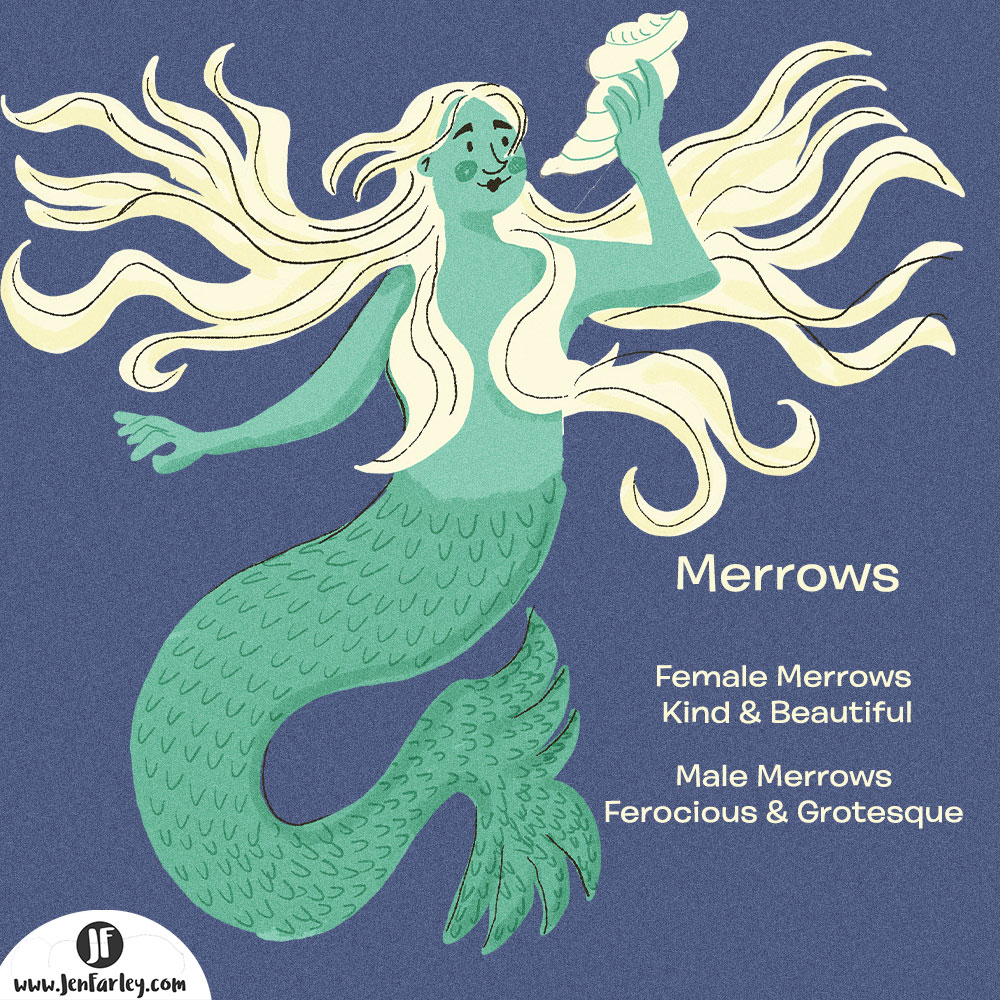
The Merrows
Merrows are the sea-people living off the Irish coast. Whether they’re kind or cruel depends entirely on the tale.
Some have befriended fishermen and rescued sailors, while others have dragged boats to the bottom of the sea.
Along the shores of the Atlantic coast of Ireland, it’s wise to stay on their good side.
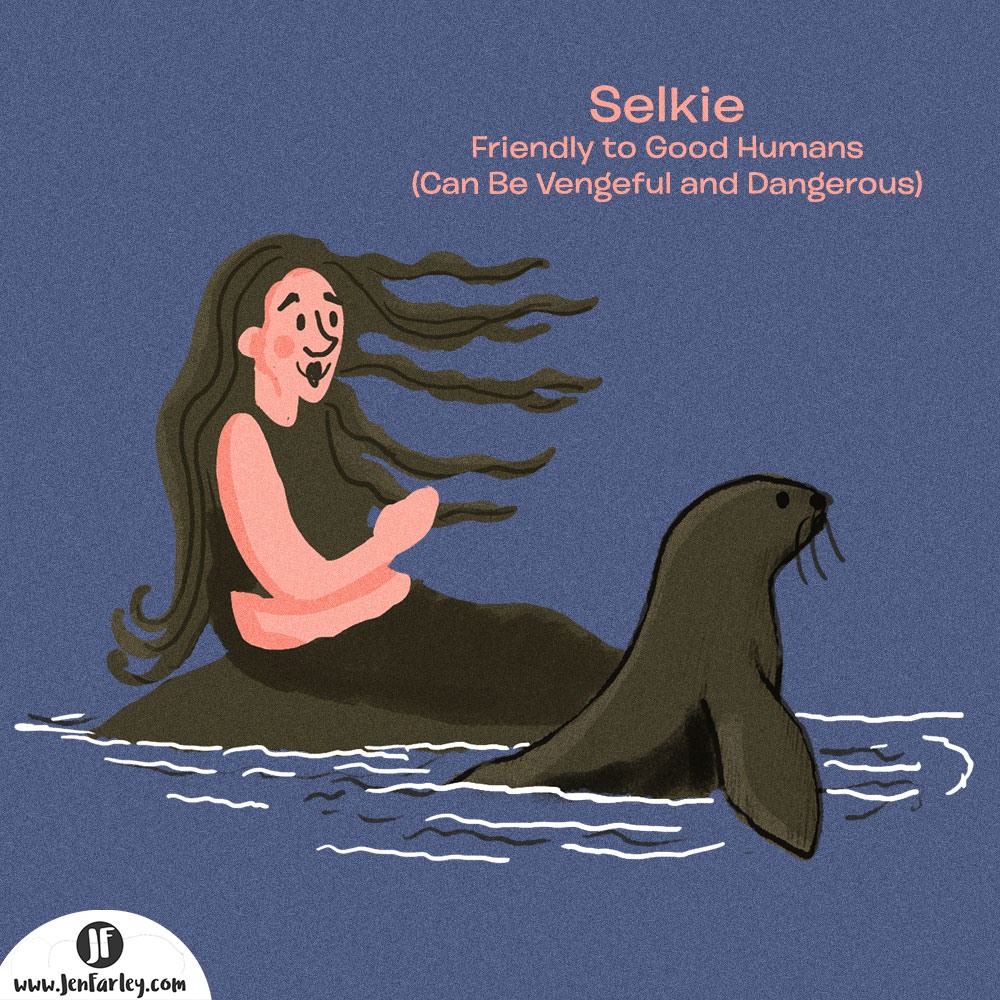
The Selkie, Atlantic Coast
Out on the wild Atlantic coast, late at night, a seal may slip out of its skin and step onto the shore as a person. These are the selkies.
Gentle and graceful, they belong to the sea. In many old stories, a selkie’s sealskin is hidden or stolen so that she can’t go home, and she is forced to live on land as a bride.
These are sad tales, full of longing for the waves, and they remind us that some creatures were never meant to be kept.
Check out the most beautiful animated movie “Song of the Sea” by Cartoon Saloon. The gorgeous story of a lighthouse keepers family and the beautiful selkie who is part of their lives.
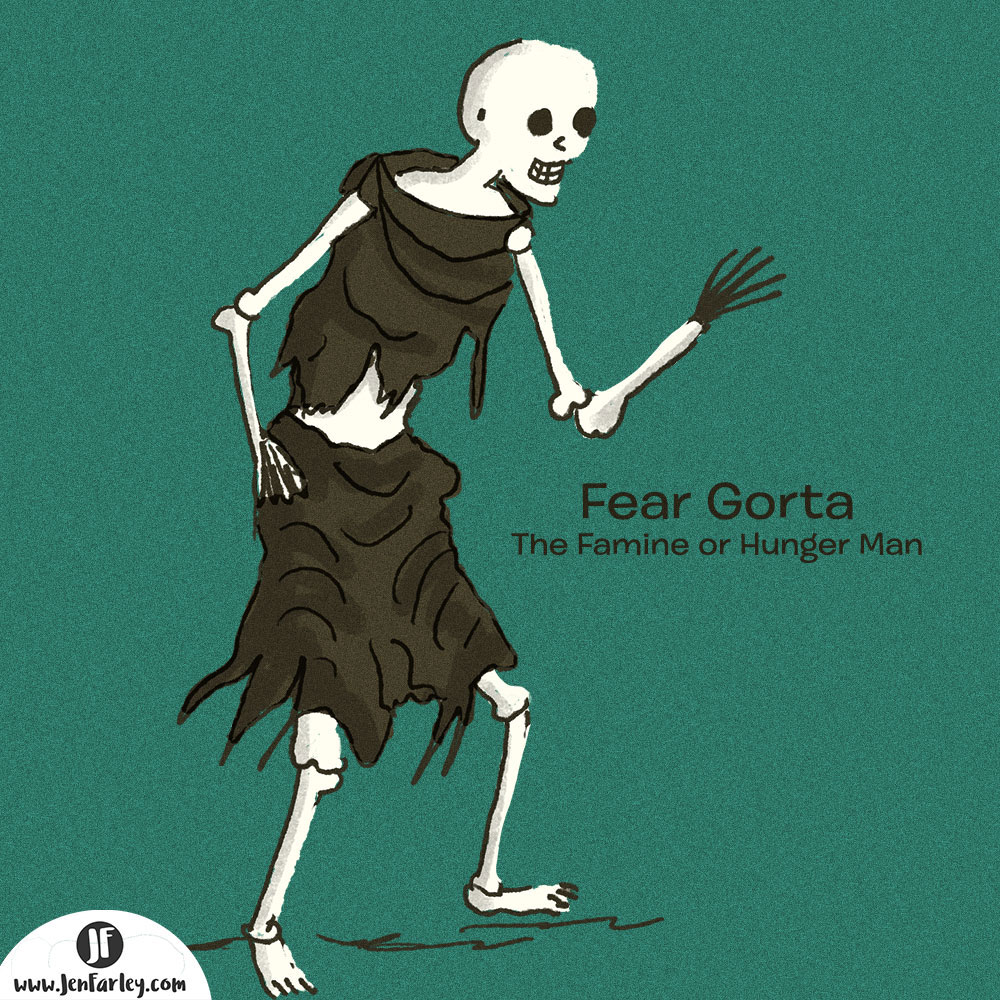
Fear Gorta
Fear Gorta means “man of famine or hunger.” He is a skeletal figure dressed in rags who wanders the roads and begging for food.
His legend grew from Ireland’s horrible famine history. Anyone who shared even a crust of bread with him was said to be rewarded with good luck, while anyone who turned him away risked misfortune.
He’s a scary sight – not someone I would want to meet on a dark road, but he also carries an old and worthy Irish belief: always be kind to strangers.
Leprechauns
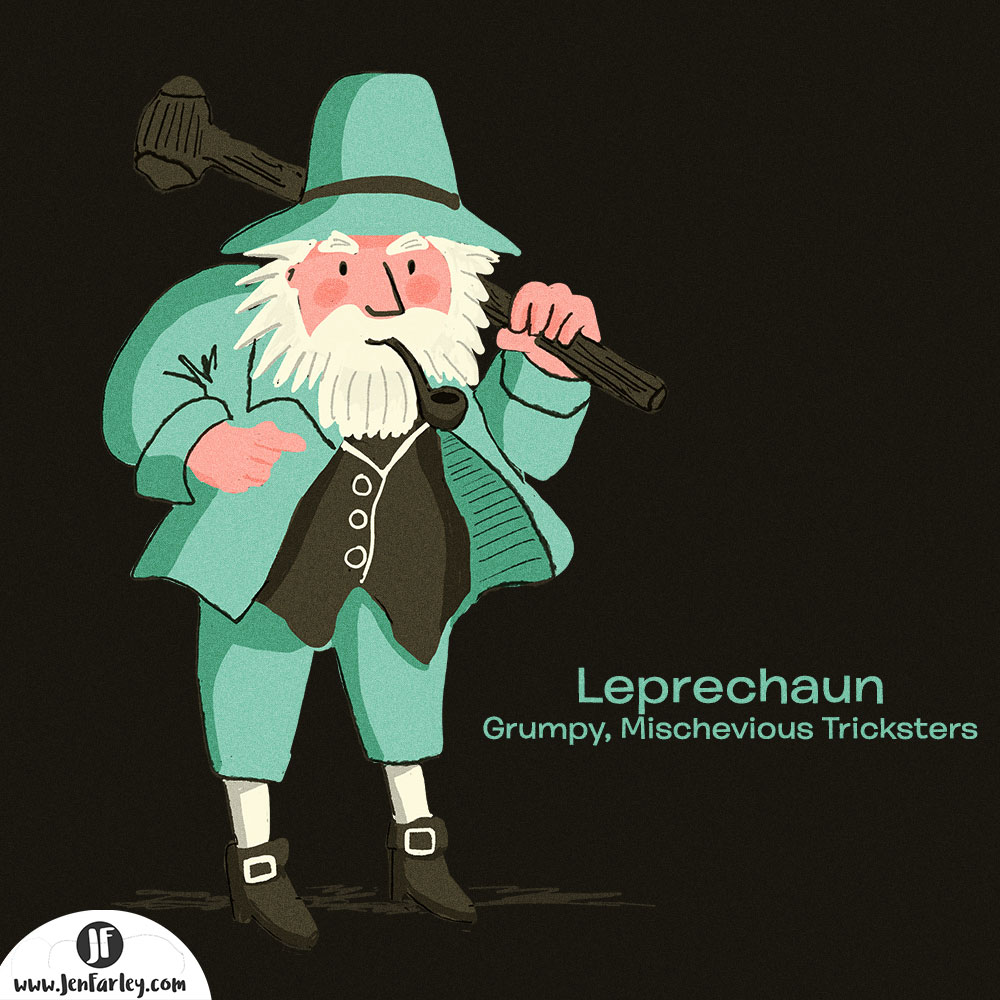
Probably best known worldwide for their pots of gold buried at the end of a rainbow, don’t be fooled by the leprechaun’s cheery reputation.
These tiny shoemakers are solitary, grumpy and mischievious tricksters. They guard their gold carefully, and if you do manage to catch one, he must grant you three wishes. Sounds good, but take your eyes off him for a single second and whooshe, he’s gone, laughing manically as he goes.
Leprechauns turn up in every corner of Ireland, but be careful with them.
Fear Liath, Antrim
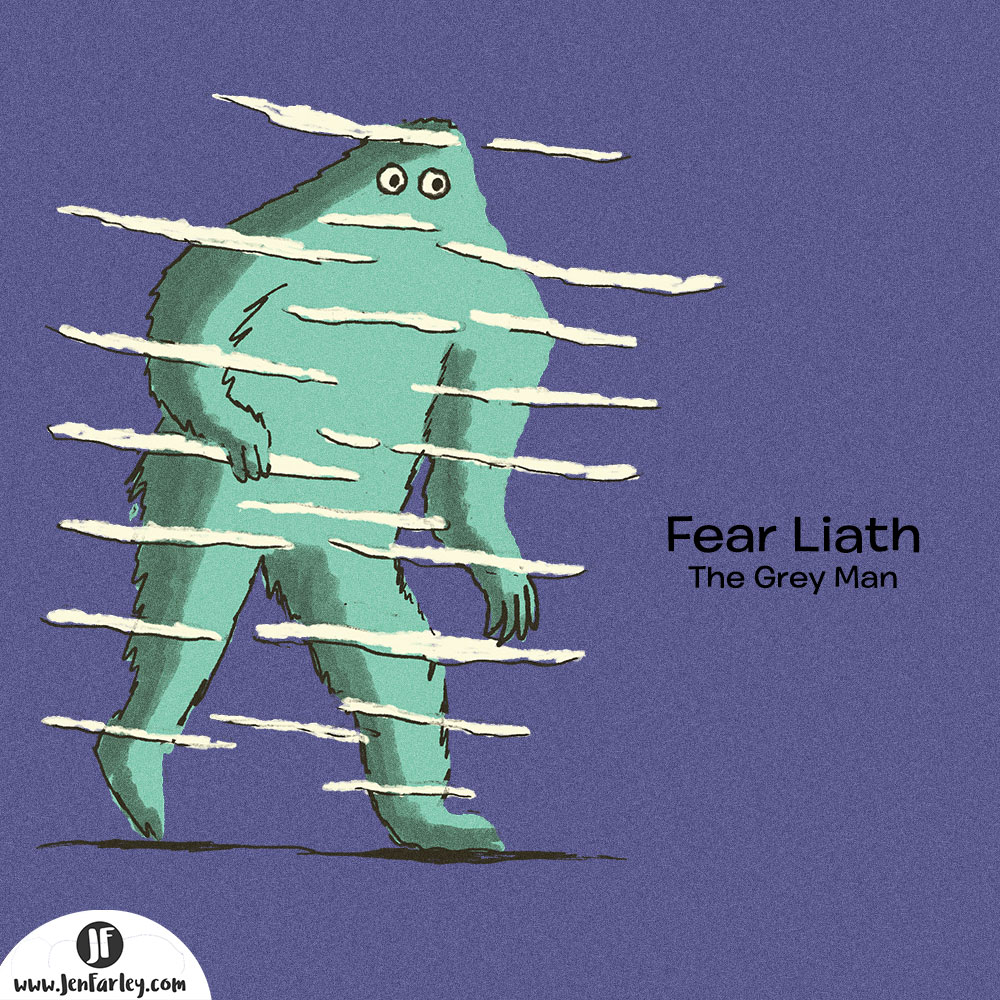
Fear Liath, the “grey man,” is a towering phantom made of mist, known best in the north of Ireland.
Travellers in the hills describe thick fog rolling in, a creeping dread, and heavy footsteps behind them. Before they know it, they are lost and disoriented, or running down the hillside, or falling off a cliff.
He is a creature of fog and loneliness, so if you’re out walking in the Antrim hills and the mist comes down, don’t look back.
Stingy Jack
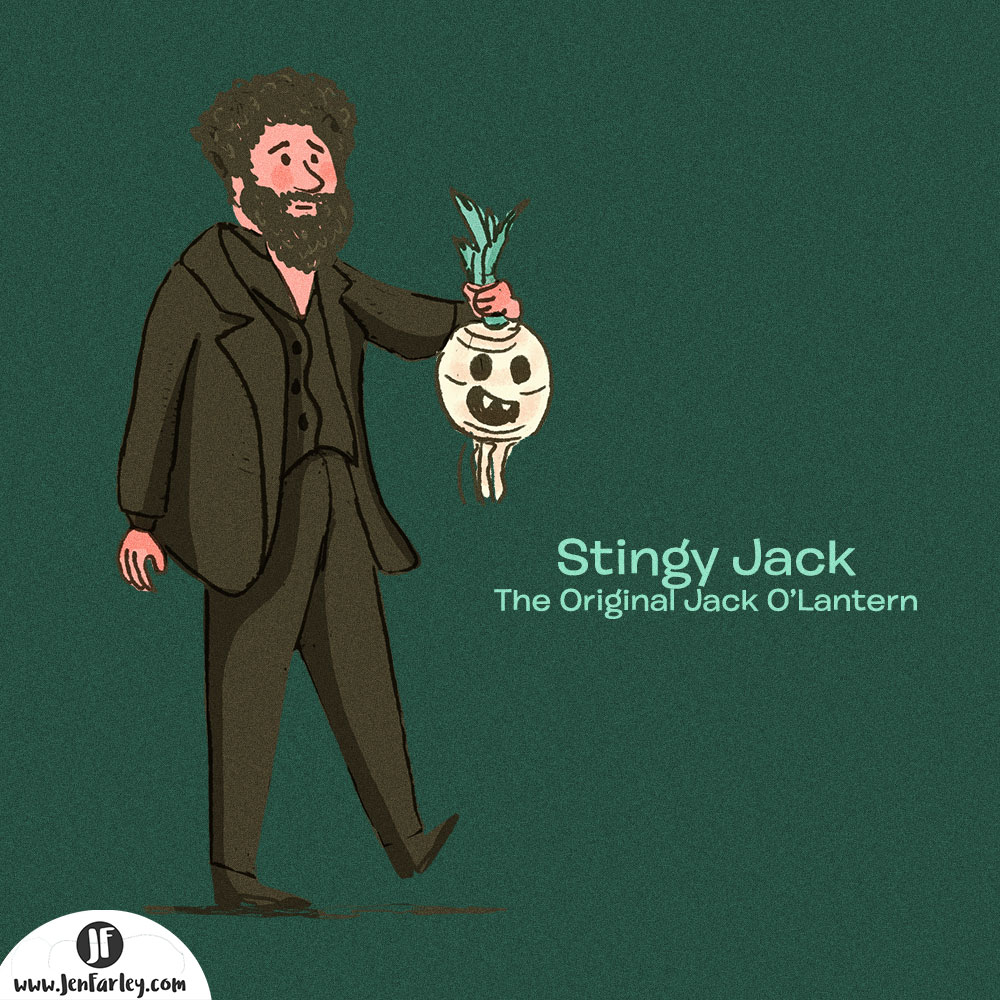
Here’s where Halloween’s most famous decoration comes from! Many people carve pumpkins at Halloween, but it was Stingy Jack who started the tradition with a different vegetable.
Stingy Jack was a miserable trickster who fooled the Devil more than once. When Jack died, neither Heaven nor Hell would have him, so he was sent to wander in the dark with only a burning coal inside a hollowed-out turnip to light his way.
Today, he still roams with his glowing turnip, the original Jack O’Lantern. People carved their own scary turnip lanterns to ward him off. When Irish families emigrated to America, they found that pumpkins were much easier to carve, hence a new tradition was born.
The Faoladh, Tipperary
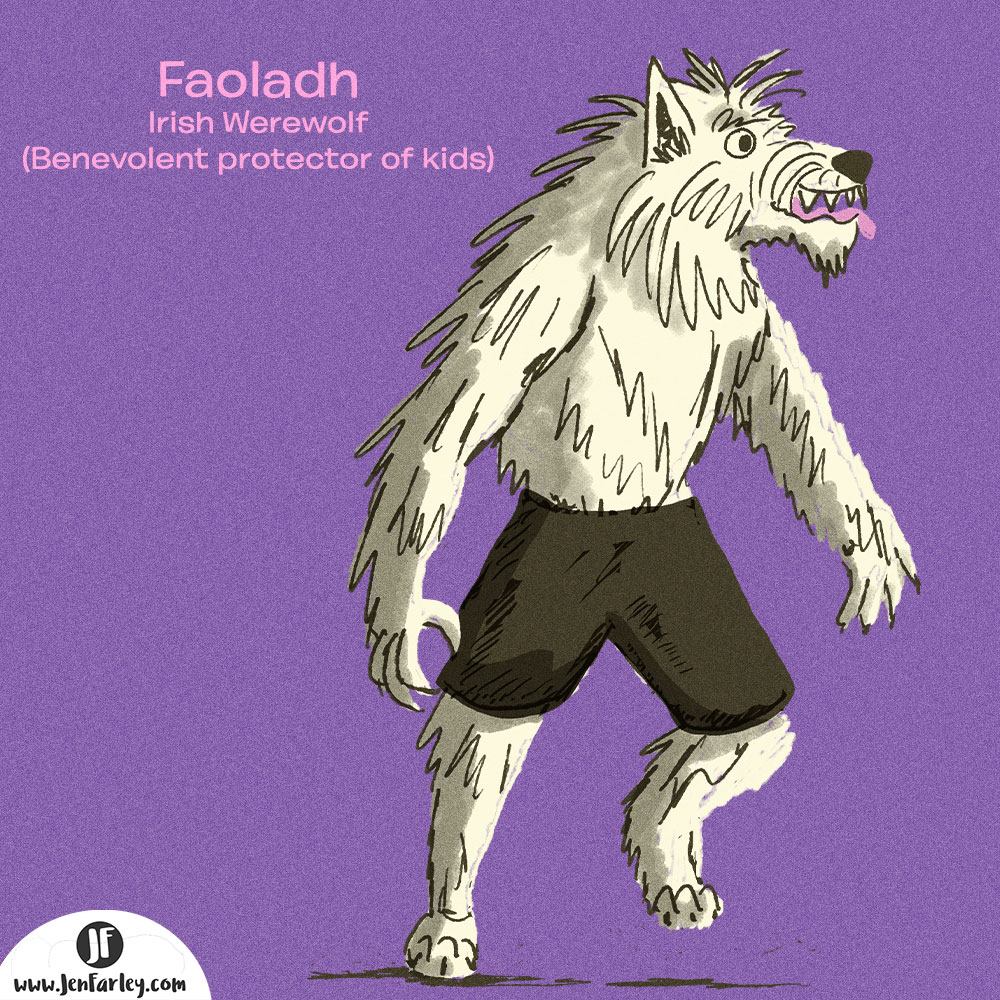
Long ago, Ireland was full of wolves. The Faoladh (pronounced “fway-luh”) were people said to take wolf form, but unlike the werewolves of other lands and legends, these were friendly guardians.
In the old stories they protected children and wounded warriors. Still, a wolf is a wolf, so on a moonlit night in rural Ireland it’s best to keep a respectful distance.
Another wonderful animated movie is Wolfwalkers, made Cartoon Saloon – the same studio who made Song of the Sea.
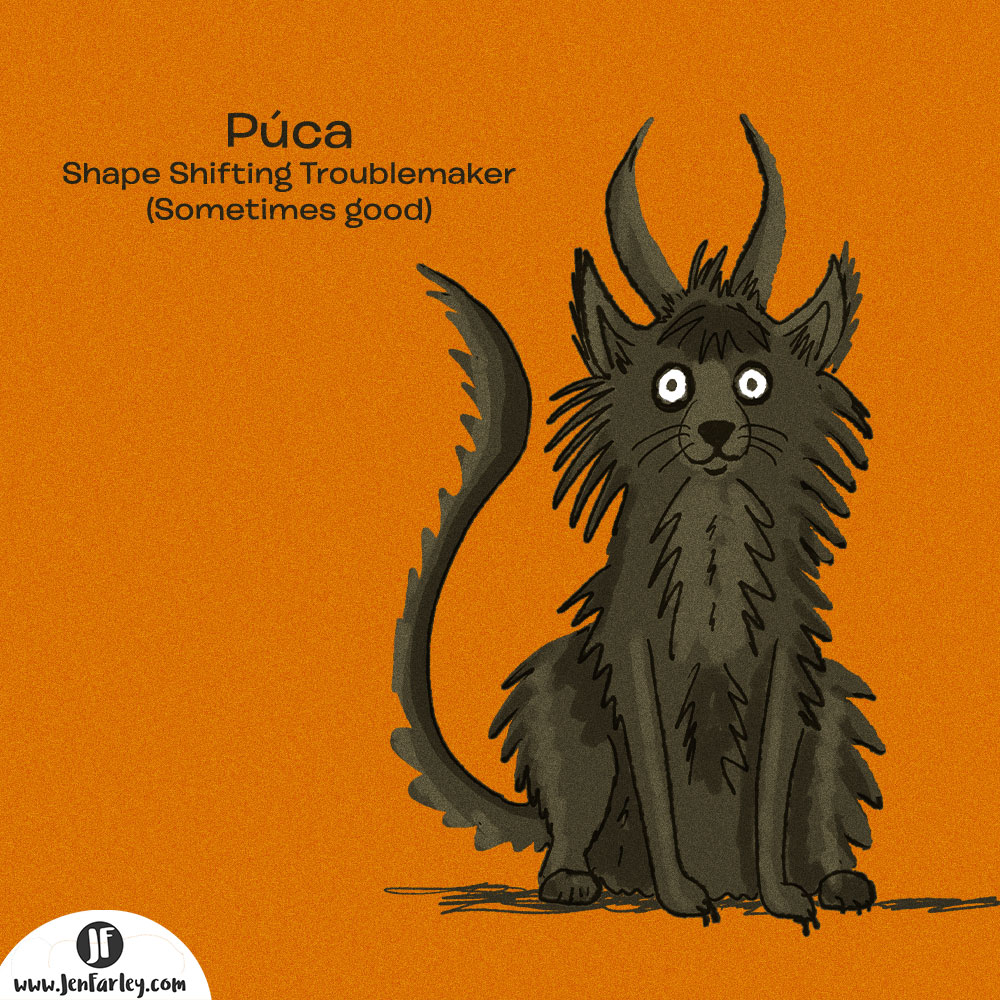
The Púca, All Over Ireland
The Púca (pronounced “POO-ka”) is a mischievous shape-shifter who can turn up anywhere in Ireland.
His favourite disguise is a sleek dark horse with wild eyes and a flowing mane, but he has also been seen as a goat, a hare or a shaggy black dog. He likes to tempt travellers onto his back, then take them on a wild midnight gallop over hedges, bogs and cliffs before tossing them into a ditch at dawn.
The Púca is more prankster than a true villain, and in some stories he even gives helpful warnings. Still, if a strange dark horse offers you a lift home, it might be safer to say thanks, but no thanks!
Meet them all (if you dare!)
These are just some of the creatures, landmarks and legends waiting to be discovered in A Children’s Atlas of Ireland. Every map has its own theme from food to folklore.
Happy Halloween, or as we say in Ireland, Oíche Shamhna Shona!